🚚 Free EU shipping on every order · no minimum · dispatched in 24h
For Research Use Only · Not For Human Consumption
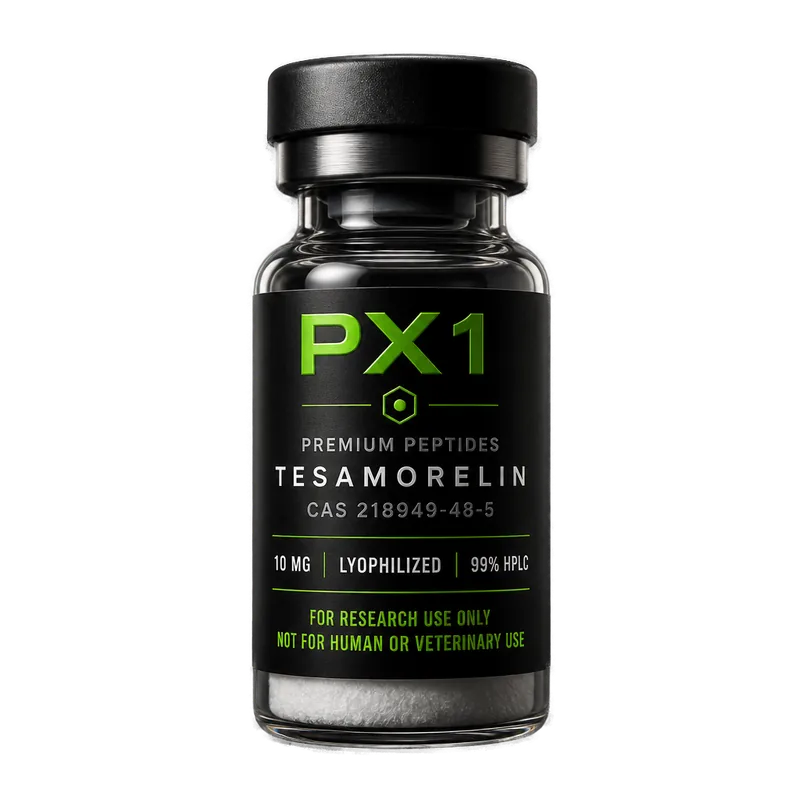
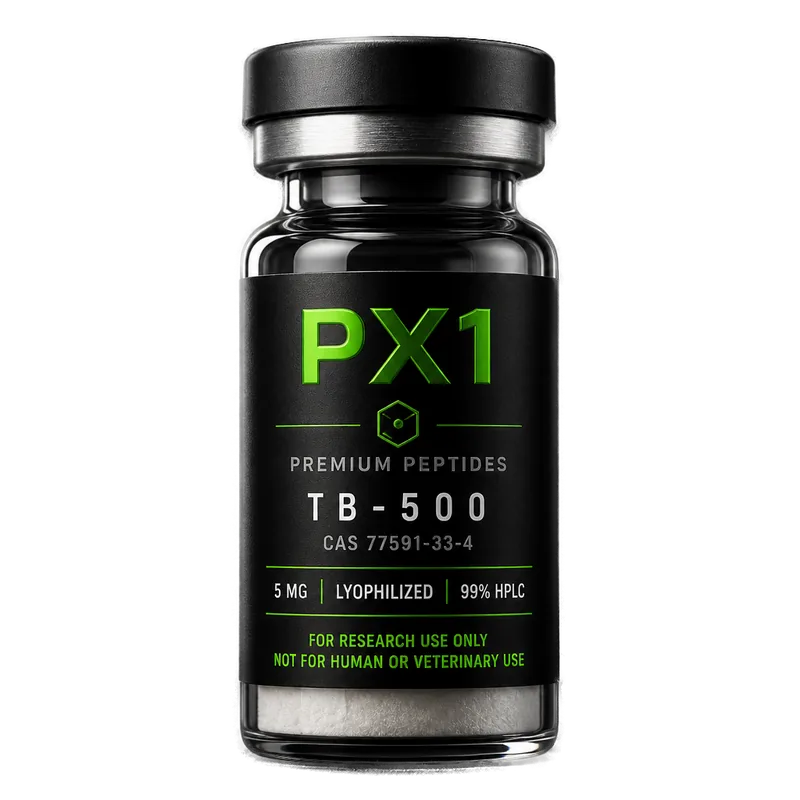
PX1 Labs TB-500 5 mg research peptide vial
Recovery & Repair

TB-500

Systemic recovery peptide for soft-tissue repair · 2.5 mg 2×/wk · 4–6 wk load + maintenance

Thymosin Beta-4 fragment · actin-binding peptide

A Thymosin β4-based peptide associated with recovery, mobility and flexibility — BPC-157's frequent partner in repair discussion.

€39.995 mg · LyophilizedIn stock
Buy more, save more price per vial
€39.99 ea
€37.99 ea −5%
€35.99 ea −10%
€33.99 ea −15%
10× €31.99 ea −20%

Volume pricing applied at checkout — free EU shipping on every order.

Purity 99%+ HPLC
Shipping Free in EU
Documentation CoA included

For laboratory and in vitro research use only. Not for human or veterinary use, and not for use in diagnostic procedures.
🇪🇺 Stocked & shipped in the EU📦 Dispatched in 24h🚚 Free EU shipping✅ No customs lottery🧾 CoA in every box
ClassSynthetic peptide (Thymosin β4-derived)
Half-life~2–3 days
Typical routeSubQ
Cycle4–6 wk load + maintenance
CategoryRecovery & Repair
Price€39.99
🧾 View Certificate of Analysis

About TB-500

TB-500 is a synthetic peptide derived from Thymosin Beta-4 (Tβ4), a 43-amino-acid actin-binding protein expressed widely across mammalian tissue. Its principal biological partner is G-actin, which places it at the center of cytoskeletal dynamics, cell motility and tissue-organization research.

PX1 Labs supplies TB-500 as a 5 mg lyophilized powder verified at 99%+ identity purity by HPLC, with identity confirmed by mass spectrometry. A lot-specific Certificate of Analysis is included with every order.

What it's known for

TB-500 is best known for recovery and mobility, often paired with BPC-157. Here is what it is most associated with. (Supplied for laboratory research use only; not an approved medicine.)

Recovery

Known for supporting recovery, frequently alongside BPC-157.

Mobility & flexibility

A popular mobility and joint-comfort topic among athletes.

Cell migration

Associated with moving repair cells into place and organising healing tissue.

What research shows

Most data is from animal and cell studies; human evidence is limited.

TB-500 explainers

Curated clips from across social media.

Swipe for more clips →

How it works

TB-500 is based on the body's own protein Thymosin β4, which binds actin — the protein that drives cell movement. That places it at the centre of cell migration into a repair site and tissue organisation.

It is also associated with new blood-vessel formation and with inflammation settling, which is why it is so often mentioned alongside BPC-157 in recovery contexts.

What the evidence shows

Full-length Thymosin β4 has human trials (e.g. corneal healing, cardiac studies); most data on the TB-500 fragment itself comes from animal work. Importantly, full-length results do not automatically transfer to the fragment. Neither form is a widely approved medicine.

An educational summary, not a treatment claim or medical advice.

Side effects & safety
Reference information — not medical adviceSummarised from public research literature. PX1 Labs products are supplied for laboratory research use only; not for human or veterinary use.

Commonly reported

  • Temporary fatigue or 'head rush' after dosing
  • Mild injection-site irritation
  • Occasional light-headedness during the loading phase

Cautions & contraindications

  • Pro-angiogenic; avoid with active or prior cancers
  • No human safety trials
  • Avoid in pregnancy/breastfeeding
  • WADA-prohibited in sport
Dosage chart (reference only)
Commonly cited ranges — not a recommendationBeginner / standard / advanced figures collected from public, widely available community references. Provided for reference and comparison only — not a dosing instruction or medical advice. Supplied for laboratory research use only.
BeginnerStandardAdvanced
2 mg 2×/wk2.5 mg 2×/wk5 mg 2×/wk
Frequency2×/week (loading)
TimingAny time
Cycle length4–6 wk load + maintenance
Typical routeSubQ

Convert any dose to a syringe draw →

Reference protocols
Reference only — not a recommendationThe figures below are commonly cited in public and community references. They are provided for reference and comparison only — not a dosing instruction, recommendation, or medical advice. PX1 Labs products are supplied for laboratory research use only; not for human or veterinary use.
ContextCommonly cited amountFrequency
Loading2–2.5 mg2× weekly, 4–6 weeks
Maintenance2–5 mg1× weekly

Reconstitution example: e.g. 5 mg + 2 mL → 2.5 mg/mL; 2.5 mg = 1 mL (100 units).

Often a loading phase of 4–6 weeks, then a less frequent maintenance amount.

Work out your own draw in the calculator →

What researchers commonly report — by week
Commonly reported, not guaranteedThese timelines summarise what self-experimenters and widely available community sources describe. Individual results vary widely, many notice nothing on this schedule, and these are not promised outcomes. Reference information only — not medical advice. PX1 Labs products are supplied for laboratory research use only.
Week 1–2
Loading phase — frequently little is felt yet.
Week 3–4
Improved flexibility, range of motion and reduced stiffness commonly reported.
Week 6+
Cited for fuller recovery of older injuries; often paired with BPC-157.

Specifications

Every PX1 Labs lot is independently verified before dispatch. The figures below describe the product class; exact lot-specific results are documented on the Certificate of Analysis included with your order.

Compound classSynthetic peptide (Thymosin β4-derived)
CAS number77591-33-4
Molecular formulaC₂₁₂H₃₅₀N₅₆O₇₈S
Molecular weight≈ 4963.4 g/mol
Identity purity99%+ (HPLC)
Identity confirmationMass spectrometry
Presentation5 mg lyophilized powder
Physical formSterile-filtered, freeze-dried
Storage2-8°C; -20°C long term
DocumentationLot-specific Certificate of Analysis

Documentation & quality

TB-500 passes the same five-stage PX1 quality process applied to every product: HPLC potency analysis, mass-spectrometry identity and purity confirmation, pH and stability validation, sterility and endotoxin (LAL) testing, and QC batch-consistency verification.

A lot-specific Certificate of Analysis ships with every order. The lot number printed on your vial matches the lot ID on the document, so the material on your bench can always be checked against the data on file.

References & research

Selected peer-reviewed literature on TB-500 (via PubMed), provided for educational context. A reference does not imply a clinical claim for PX1 Labs products.

  1. beta-Thymosins.
  2. Thymosin beta-4: a multi-functional regenerative peptide. Basic properties and clinical applications.
  3. Thymosin beta-4 and the eye: the journey from bench to bedside.

TB-500 — questions

Is TB-500 the same as Thymosin Beta-4?

TB-500 is a synthetic peptide based on the actin-binding region of Thymosin Beta-4. Researchers should confirm the exact sequence and molecular weight for their lot against the Certificate of Analysis.

How should TB-500 be stored?

Sealed lyophilized vials are stable short-term at room temperature in a cool, dark place; refrigerate at 2-8°C or freeze at -20°C for longer storage and avoid repeated freeze-thaw cycles.

Often paired with

PX1 Labs Retatrutide research peptide
★ Most popular

Retatrutide

Our flagship — triple agonist (GLP-1 · GIP · glucagon). €89.95, free EU shipping, CoA in the box.

View →

Documented peptides, on your bench tomorrow.

Every PX1 order ships within 24 hours with full analytical documentation in the box.

🛒 Telegram Shop
€39.99🛒 Order on Telegram